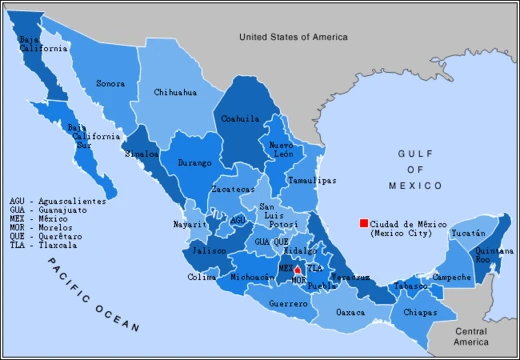
Baja California Sur
Capital of Baja California Sur, founded in 1720.

La Paz (pronounced [la ˈpas], English: "peace") is the capital and largest city of the Mexican state of Baja California Sur, with a 2020 census population of 250,141 inhabitants, making it the most populous city in the state. La Paz is located in La Paz Municipality, the fourth-largest municipality in Mexico by area (20,275 km² / 7,828 sq mi), with a population of 292,241. The city sits on the Bay of La Paz on the Baja California peninsula, near the Sierra de la Laguna, and is one of three Mexican state capitals on the coast.
- Capital
- La Paz
Verified Timeline
Lore & Background
The first European known to have landed in Baja California was Fortún Ximénez. In 1533, Hernán Cortés sent two ships—Concepción under Diego de Becerra and San Lázaro under Hernando de Grijalva—to explore the South Seas. Ximénez led a revolt, killed Becerra, and sailed to a bay that is now the port of La Paz. There, his crew raped native women and plundered pearls, leading to a violent confrontation where Ximénez and some companions were killed. Cortés himself arrived on 3 May 1535, naming the bay Bahia de la Santa Cruz, and attempted to establish a colony, but it failed due to supply shortages. The city was founded in 1720. Between 1768 and 1803, Franciscan missionaries established political and religious jurisdiction over Baja California Sur, including La Paz. From 10 January 1854 to 8 May 1854, La Paz served as the capital of William Walker's Republic of Sonora, which collapsed due to lack of US support and Mexican pressure.
Reader's Guide
La Paz is a popular destination for ecotourism, offering activities such as diving, snorkeling, hiking, and kayaking. The Bay of La Paz is notable for its high productivity of krill species Nyctiphanes simplex, which supports rich fisheries and attracts diverse marine predators. Visitors are drawn to whale sharks, sea lions, and colorful fish, as well as scenic coastal landscapes. The Isla Espíritu Santo group, bordering the northeast portion of the Bay of La Paz, is the primary tourist destination. There are some 900 islands and islets in the Gulf of California, with 244 under UNESCO protection as World Heritage Bio-Reserves. La Paz has a subtropical hot desert climate (Köppen BWh), averaging over 300 days of sunshine annually and 3,148 sunshine hours. Summer highs reach 34–36 °C (93.2–96.8 °F), and winter nights drop below 15 °C (59 °F). The cooling Coromuel winds blow from the Pacific at night during summer. Industries include silver mining, agriculture, fishing, and pearls. The now defunct airline Aero California had its headquarters in La Paz. The city is served by Manuel Márquez de León International Airport.
Did You Know?
- La Paz had a 2020 census population of 250,141, making it the most populous city in Baja California Sur.
- The first European to land in Baja California was Fortún Ximénez in 1533, who reached the bay that is now La Paz.
- Cortés arrived on 3 May 1535 and named the bay Bahia de la Santa Cruz.
- La Paz served as the capital of William Walker's Republic of Sonora from 10 January 1854 to 8 May 1854.
- The city averages over 300 days of sunshine annually and 3,148 sunshine hours.
Frequently Asked Questions
Who is Baja California Sur?
Baja California Sur is Mexico's 31st state, occupying the southern portion of the Baja California Peninsula. It was the final state to join the Mexican federation, gaining full statehood in 1974.
What is Baja California Sur's capital and largest city?
La Paz serves as both the capital and the most populous city in the state. It anchors the region's identity alongside the well-known resort towns of Cabo San Lucas and San José del Cabo.
When and how did Baja California Sur become a state?
The territory was previously known as El Territorio Sur de Baja California before being elevated to full state status in 1974. This admission made it the last of Mexico's 31 states to enter the federation.
Why is Baja California Sur notable in Mexican demographics?
At roughly 73,909 square kilometers, it holds the distinction of being the least densely populated state in the country and ranks second in lowest total population. Its sparse settlement pattern sets it apart from Mexico's more urbanized states.
What makes Baja California Sur culturally distinctive?
The state is home to some of Mexico's oldest known cave paintings, a testament to prehistoric human presence on the peninsula. Beyond archaeology, it is widely recognized for its dual coastline facing the Pacific and the Sea of Cortez.
More in Mexican States 1-19
Related in Mexican States
Links follow this subject's own source article.
Spotted an error? Know more?
This is a living reference — every entry is fact-audited, and reader corrections feed straight into our audit queue. Suggest an edit · See this site's audit record