Frequently Asked Questions
The most-asked questions about mexican states.
What exactly does this encyclopedia cover?
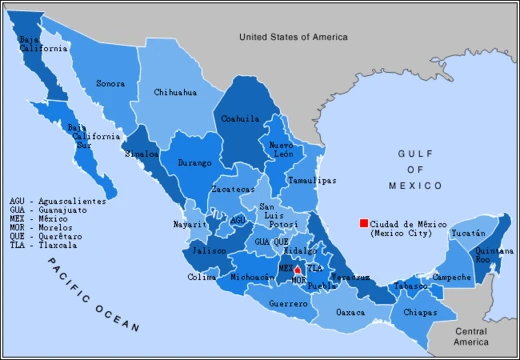
It profiles all 32 federal entities of Mexico — 31 states plus Mexico City as a special federal district — treating each as its own entry with geography, history, culture, and governance details.
How many states are there and when did they form?
Mexico has 31 states alongside Mexico City, most established in the 1820s–1850s after independence, with Tamaulipas (1858), Quintana Roo (1952), and Baja California Sur (1974) joining the map considerably later.
Who are the key figures a newcomer should look up first?
Rather than fictional characters, the central 'figures' are each state's governor, its capital city, and the historical leaders or indigenous peoples who shaped the region's identity.
Where should a new reader begin?
Start with Mexico City as the political and cultural hub, then move to the most populous states — Mexico State, Jalisco, and Veracruz — before branching into smaller or more recently created entities.
What are a few must-know facts about the collection as a whole?
Every state carries its own flag, coat of arms, and constitution; sizes range from tiny Colima to the sprawling Sonora; and together they encompass dozens of ecosystems, hundreds of indigenous languages, and centuries of layered history.
What are the most notable 'milestone moments' in the group's history?
Key turning points include the 1824 adoption of the federal constitution, the 1952 admission of Quintana Roo after the Yucatán secession crisis, and the 1974 split that created Baja California Sur.
How do the states interact politically with each other?
They operate under a federal system: each maintains its own legislature and executive, while sharing a bicameral national congress, a single president, and a common constitution.
What sets this collection apart from other countries' subdivisions?
Each state's identity is deeply anchored in pre-Hispanic civilizations, colonial-era boundaries, and 20th-century revolutionary reforms, giving every entry a layered, almost independent cultural character.
Which states tend to be the most popular or frequently discussed?
Jalisco (mariachi and tequila), Yucatán (Maya archaeological sites), Oaxaca (indigenous heritage and cuisine), and Baja California (desert and border landscapes) consistently draw the most reader attention.
Is this encyclopedia an official government publication?
No — it is an unofficial, fan-maintained reference that compiles publicly available information into a single navigable format for readers who want to explore all 32 entities in one place.